
Rummy Circle Make a Deposit
Make a Deposit Safety Guide for Rummy Circle
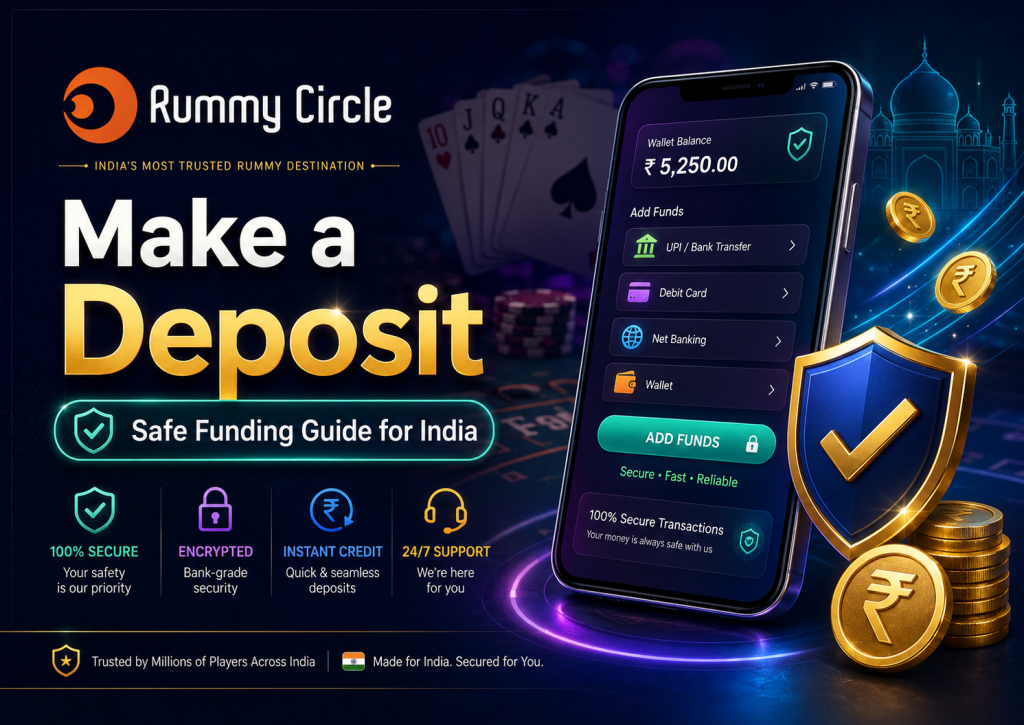
Make a deposit should be understood as an account-safety topic before it is treated as a payment action. For Indian players, adding money to any real-money gaming account requires more than choosing a payment method and entering an amount. A responsible page should explain how users can protect their identity, review platform rules, understand payment limits, and avoid impulsive financial decisions. This approach keeps the topic useful without turning the page into pressure-driven casino copy.
On Rummy Circle, the safest way to discuss account funding is to focus on preparation. A player should know whether the account is verified, whether the payment method belongs to the same person, whether the site shows clear transaction details, and whether the user has already set a personal spending limit. A deposit should never be framed as a shortcut to profit. It should be treated as paid entertainment for adults who understand risk, uncertainty, and budget control.
Indian users often prefer familiar local payment routes, but convenience should not replace caution. Quick payments can make gaming feel effortless, which is exactly why players need a clear plan before adding funds. The most responsible habit is to decide the entertainment budget in advance and avoid adding more money during emotional moments. If the user feels pressure, frustration, or urgency, the safer choice is to pause rather than continue.
A strong casino expert page should also explain the relationship between funding, verification, and account security. If a platform requires KYC, that process should be completed honestly and accurately. Payment details should match the registered account holder. Users should not rely on another person’s bank account, wallet, or UPI ID. Mismatched details can create security issues, failed transactions, or later withdrawal problems.
Account Access and Internal Navigation
A safe funding experience begins with account clarity. Existing users should enter through the Login page and review account status before doing anything payment-related. Anyone comparing promotional conditions should read the Bonus terms carefully because rewards, locked balances, or wagering rules can affect how funds behave inside the account. New adult users should complete Sign up with accurate personal information from the beginning, since wrong details can create verification and payment issues later.
Mobile users may prefer the Apк page for safer installation guidance, while readers comparing entertainment areas can move naturally between Slots and Games without treating either section as a reason to spend more than planned. Support explanations should be available through the FAQ section, and responsible reference pages can be collected in the Links.
This kind of internal linking helps the page feel structured and useful. It guides readers toward relevant account, safety, and support pages without stuffing unnatural phrases into the article. More importantly, it keeps the deposit topic connected to responsible account management rather than isolated payment promotion.
What Players Should Check Before Adding Funds
Before adding funds, an adult player should review several basic points. The first is identity. The registered name, mobile number, email, and any verification information should be consistent. The second is payment ownership. A user should only use a payment method that belongs to them. The third is affordability. The amount should fit a pre-decided entertainment budget, not money needed for bills, savings, school, family needs, or debt. The fourth is transaction clarity. The platform should show the amount, payment route, and status clearly.
A responsible page should not tell readers that funding an account is automatically a good idea. Instead, it should help them decide whether they are prepared. If a player has not set limits, does not understand the rules, or is trying to recover previous losses, the safer decision is not to add money. Casino gaming should remain optional entertainment, not a reaction to stress or financial pressure.
Players should also avoid saving payment details on shared devices. If a phone or browser is used by other people, stored payment access can create risk. A secure account needs strong passwords, private device access, and careful handling of OTPs or payment confirmations. No legitimate support agent should ask for banking passwords, full card credentials, or OTP codes outside the official payment flow.
Why Payment Safety Matters in India
India’s digital payment environment is fast and convenient, but speed can create risk when users do not check details carefully. UPI, wallets, net banking, and card payments can all feel familiar, yet every transaction still requires attention. A wrong amount, an unsafe device, or a rushed confirmation can create problems that are harder to fix after the payment is completed.
A safe Rummy Circle deposit page should therefore focus on user control. The player should know why they are adding funds, how much they are willing to spend, and when they will stop. This is not only responsible gaming advice. It is practical financial discipline. A clear plan protects the user from impulsive decisions and helps keep casino entertainment separate from daily money needs.
The page should also remind readers that successful payment does not mean successful gameplay. Funding an account only makes money available for entertainment. It does not improve odds, guarantee results, or reduce risk. That distinction is essential for credible casino content, especially for Indian audiences who may compare different gaming platforms and payment offers before choosing where to play.
Payment Method Safety Before Adding Funds
A safe Rummy Circle deposit page should focus on the player’s control over money, identity, and device access. Indian users are often familiar with quick payment routes, but speed does not remove the need for caution. Before adding funds to any real-money gaming account, an adult player should know which payment method is being used, whether the account details match their own verified profile, and whether the amount fits a planned entertainment budget. This is the difference between account funding as a controlled decision and account funding as an impulsive reaction.
The safest payment method is not always the fastest one. It is the method the player understands, owns, and can track clearly. A user should be able to confirm the transaction amount, see the payment reference, receive a confirmation message, and recognise the merchant or platform context before approving anything. If the payment screen looks unfamiliar, if the amount is wrong, or if the player feels rushed, the safer decision is to stop and review the details rather than continue.
Indian digital payments are convenient because they are built for speed. UPI, wallets, cards, and net banking can make funding feel simple, but this convenience can also lead to careless confirmation. A responsible page should explain that payment approval is a financial action. Once the user confirms it, the money can move quickly. That is why the decision should happen before the payment screen, not during a moment of pressure.
A strong expert article should also separate payment safety from game excitement. The purpose of adding funds is to create an entertainment balance, not to guarantee results. No payment method improves odds, changes outcomes, or makes a session safer by itself. Real safety comes from budgeting, account security, verified details, and the ability to stop when the planned limit is reached.
Budget Planning and Deposit Limits
Budget planning is the core of responsible account funding. A player should decide the maximum amount before entering the cashier area. That amount should be treated as entertainment spending, similar to paying for a movie, a mobile game, or another leisure activity. It should never come from money reserved for rent, food, education, family needs, debt repayment, medical costs, or savings. This distinction should be visible in the content because it gives the page genuine user value.
Deposit limits are also important because they help turn a general intention into a practical rule. A player may tell themselves they will not spend too much, but a defined limit is stronger than a vague plan. If the platform provides daily, weekly, or monthly limit tools, users should consider setting them before funding the account. If formal tools are not available or not visible, the player should still keep a personal limit outside the platform.
The safest deposit decision is made when the player is calm. Adding funds after a loss, after a frustrating session, or because of pressure to keep playing is a warning sign. A responsible guide should say this plainly. Chasing losses is one of the most common harmful patterns in real-money gaming. A page that ignores this point may look promotional, but it will not look trustworthy.
Players should also avoid multiple small deposits made without tracking the total. Small amounts can feel harmless individually, but they can add up quickly. A practical habit is to record the total amount added during a session and stop when the pre-set limit is reached. This is simple advice, but it is exactly the kind of advice that makes a casino safety page feel useful rather than decorative.
Fraud Awareness and Payment Confirmation
Fraud awareness should be part of every deposit safety page. A player should never approve a payment request that appears outside the official platform flow. They should not share OTPs, card credentials, UPI PINs, wallet passwords, or banking access with anyone claiming to be support. Legitimate payment confirmation should happen only through recognised payment screens and official account areas. If someone asks for private banking information through chat, social media, or an unofficial message, the safest assumption is that the request is unsafe.
Players should also verify the amount before approval. A rushed confirmation can lead to avoidable problems. If the payment screen displays a different amount from the one the player intended, the transaction should be stopped. If the payment request arrives unexpectedly, it should not be approved. If a page redirects in a suspicious way, the user should close it and return through the official site or app route.
Transaction records matter. After a payment, users should keep the payment reference, confirmation message, and visible status until the balance is updated correctly. This does not mean sharing screenshots publicly. It means keeping basic proof available in case support needs to review a missing or delayed credit. A good safety page should explain this because it helps users respond calmly if something does not update instantly.
Another important point is device hygiene. Players should avoid using public Wi-Fi, shared phones, or unsecured browsers for account funding. They should log out after using a shared device and should not save payment credentials where other people can access them. These habits are basic, but they are especially relevant when real-money accounts are involved.
Safe Funding as Part of Account Management
Adding funds should be connected to the broader account management system. A player who funds responsibly also knows when to stop, how to track payments, how to protect account access, and how to avoid emotional decisions. This is why a serious Rummy Circle page should not treat deposit safety as a small paragraph. It is a complete decision path.
The best user journey is simple. The player checks account identity, reviews the payment method, confirms the budget, understands the risk, and only then decides whether account funding is appropriate. If any part of that path feels unclear, the safer option is to pause. A player should never feel that they must add funds immediately to keep up with a promotion, recover a loss, or continue a session.
A professional casino page should also use balanced language. It can explain payment preparation and platform safety, but it should not pressure the user into spending. The strongest version of this content helps adult readers stay informed, protect their accounts, and make careful decisions. That is what makes the page credible for Indian audiences and suitable for a real expert-style casino site.
Deposit Limits and Player Control
A safe Rummy Circle deposit guide should treat limits as the centre of the account funding process. Limits are not only technical settings. They are practical tools that help adult players keep gaming separate from essential money. Before any account funding decision, the player should know how much they can afford to spend, how long the session should last, and what signal will tell them to stop. Without those boundaries, even a small payment can become part of an impulsive pattern.
For Indian players, this is especially relevant because digital payments can feel almost instant. Fast approval is convenient, but it also reduces the time a user has to reconsider. A player who has already set a personal limit is less likely to make a rushed decision at the cashier stage. The amount should be fixed before opening the payment screen, not adjusted during emotional moments. If the player feels annoyed, impatient, or focused on recovering previous results, the safest decision is to pause.
Deposit safety also depends on how the user thinks about value. A funded account balance should be seen as entertainment credit, not as working capital or a route to income. This distinction is important because casino outcomes are uncertain. Adding more funds does not improve the chance of a favourable result, change the game mathematics, or remove risk. The only thing it does is make more money available for play. A responsible page should make that clear without sounding dramatic.
Good content should also recognise that limits are personal. One player’s entertainment budget may be very different from another’s. The correct amount is not defined by the platform’s maximum, a promotion, or what other people spend. It is defined by the user’s own finances and comfort level. A safe deposit page should encourage readers to choose the smaller amount when unsure, stop after reaching the limit, and avoid treating additional payments as a normal response to losing.
Reading Payment Status Correctly
Payment status is another area where players need clarity. After an attempted account funding action, the user may see a status such as successful, pending, failed, reversed, or under review. These labels should be read carefully before taking any further action. A successful payment normally means the transaction has been accepted and the balance should update according to platform timing. A pending payment means the result is not final yet. A failed payment means the request did not complete. A reversed payment means the funds may be returned through the payment route after processing.
The safest habit is to wait for the official status before trying again. Repeating payment attempts too quickly can create confusion, duplicate debits, or support complications. If the balance does not update instantly, the player should check the payment reference and official account message rather than assuming the money is lost. Transaction systems can have short delays, especially when external providers are involved.
Support communication should be precise. If a payment issue needs review, the player should provide the transaction date, amount, payment route, reference number, and the status shown in the account. They should not share OTPs, UPI PINs, passwords, or full banking credentials. A serious deposit safety guide should emphasise official support routes because payment-related scams often rely on panic, urgency, and unofficial communication.
Players should also distinguish between a platform issue and a payment provider issue. Sometimes the gaming account may wait for confirmation from a bank, wallet, or UPI route. In other cases, the platform may receive the payment but need time to reflect the balance. The user does not need to diagnose the entire system, but they should understand that payment status is a process, not always an instant final answer.
Avoiding Bonus Pressure
Promotions can influence deposit behaviour, so a responsible page should handle them carefully. A bonus may look attractive, but it should never be the only reason to add funds. Players should read the terms first, especially conditions related to eligibility, wagering, expiry, restricted games, and withdrawal impact. If the terms are unclear, the safer decision is to skip the promotion rather than fund the account under assumptions.
A common mistake is treating an offer as urgent. Limited-time language can push users toward fast decisions, but financial choices should not be made under pressure. The player should ask whether they would still add the same amount without the promotion. If the answer is no, the bonus may be influencing the decision too heavily. A professional Rummy Circle page should explain that offers are optional and should fit the user’s budget, not override it.
Bonus terms can also affect how balances behave after funding. Some funds may be locked, conditional, or linked to specific game categories. That can matter later if the player wants to withdraw. A safe deposit guide should connect funding decisions with future account control. Adding funds without understanding promotional rules can create confusion at the withdrawal stage.
The strongest advice is simple: read first, decide calmly, and avoid chasing value that does not fit the budget. If an offer is too complicated or creates pressure, it is not a good reason to add money. This keeps the page balanced and useful for real players.
Keeping Account Funding Separate from Gameplay Emotion
The most important safety habit is emotional separation. Account funding should happen before play begins, when the user is calm and able to think clearly. It should not happen immediately after a loss, during frustration, or because the player feels close to a better result. Real-money gaming can create emotional momentum, and fast payment tools can make it too easy to continue without reflection.
A safer structure is to create a session rule. The player decides the budget, adds no more than that amount, plays within the plan, and stops when the limit is reached. This rule does not depend on winning or losing. It depends on control. If the player wins, the limit still applies. If the player loses, the limit still applies. This is how account funding stays connected to entertainment rather than emotional reaction.
A credible casino page should make this point without moralising. The goal is not to shame the player. The goal is to give useful guidance that supports safer decisions. A page that talks about funding but ignores emotional triggers will feel incomplete. A page that explains limits, payment status, bonus pressure, and account control feels more like expert content.
For Rummy Circle, this tone is important. The site should look like a serious gaming resource for adult Indian readers, not a page that pushes deposits as fast as possible. The deposit topic can be covered responsibly when the focus remains on safety, verification, budget control, and informed choice.
Final Deposit Safety Review for Rummy Circle
A safe Make a Deposit page for Rummy Circle should end with a clear message: account funding is a financial decision, not a gameplay shortcut. Indian players should treat every payment as planned entertainment spending, not as a way to improve results, recover losses, or unlock guaranteed value. The safest deposit decision is made before the payment screen opens, while the player is calm, informed, and aware of their limit.
The strongest account funding habit is preparation. A player should confirm that the account is registered correctly, payment details belong to the same person, the device is private, and the amount fits a pre-set budget. These checks may sound basic, but they prevent many common problems. Most payment issues do not come from complicated systems. They come from rushed confirmations, unclear balance expectations, wrong payment details, repeated attempts, or emotional decisions after gameplay.
A responsible Rummy Circle page should also explain that payment speed is not the same as payment safety. Fast payment options can be convenient, but they can also make overspending easier if the player does not pause before approval. A safe user should review the payment amount, confirm the merchant or platform context, wait for the official transaction status, and keep a reference number until the balance is updated. If anything looks unclear, the correct response is to stop and check, not to approve quickly.
Another important point is bonus pressure. Promotions can make deposits feel more attractive, but users should never fund an account only because an offer appears urgent. The player should understand whether promotional funds are locked, whether conditions apply, and whether future withdrawals may be affected. If the rules are unclear, the safer choice is to avoid the offer rather than accept terms that may create confusion later.
When Not to Add Funds
There are situations where the safest deposit decision is not to add funds at all. If the player is frustrated, trying to recover losses, borrowing money, using essential funds, or feeling pressure from a promotion, account funding should stop. These are not minor warning signs. They are indicators that the decision is no longer based on calm entertainment planning.
A player should also avoid adding funds if the account is not fully understood. If KYC status is unclear, payment ownership is mismatched, or the transaction screen looks unusual, the user should pause before approving anything. The goal is not to move money quickly. The goal is to keep control over the account, budget, and personal payment information.
Responsible deposit behaviour also means accepting that casino results are uncertain. Adding more money does not make a game more likely to pay, does not improve odds, and does not fix a previous session. It only increases the amount available for play. This is why a strong deposit safety guide should keep the focus on user control rather than excitement.
If a player feels unable to stop funding the account, the next step should be protective action: take a break, use limit tools where available, contact support through official channels, or seek responsible gaming help. A serious casino site should not hide this advice. It improves credibility and makes the page useful for real adult users.
Final Account Funding Checklist
Before any deposit-related decision, the player should review the full account situation. The account should be accessible only through official pages or the verified app route. The payment method should belong to the user. The amount should be planned in advance. The transaction screen should clearly show the expected value. The player should understand that the money is being used for entertainment, not income.
This checklist also protects future withdrawals. If payment ownership is clear from the start, later cash-out review is usually easier. If the user relies on third-party payment routes or mismatched details, account review can become more complicated. A safe deposit page should therefore connect funding decisions with long-term account reliability.
A practical final rule is to treat every payment as final once approved. The player should not assume that a mistaken deposit can always be reversed quickly. If a payment is pending or unclear, the user should wait for official status updates and keep the transaction reference. Repeating payments too quickly can create more confusion than the original delay.
Responsible Conclusion for Indian Players
Rummy Circle deposit safety depends on preparation, budget discipline, account security, and emotional control. The safest player is not the one who funds the account fastest. The safest player is the one who understands the payment, accepts the risk, sets a limit, and stops when the planned amount is reached.
For Indian users, this means using owned payment methods, protecting OTPs and account credentials, avoiding deposits under pressure, and reading bonus conditions before accepting any offer. The page should never make deposit behaviour look automatic or risk-free. It should help adult readers make informed choices and keep account funding within a controlled entertainment plan.
A strong Make a Deposit safety guide should leave the reader with one clear standard: add funds only when the decision is calm, affordable, secure, and fully understood. If any part of that standard is missing, the safer choice is to pause.






Comments